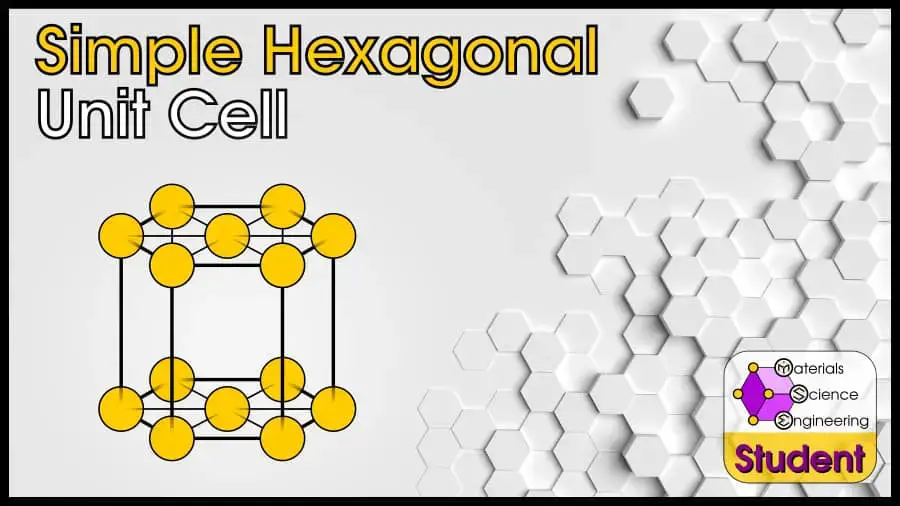
The Peltate Hexagonal (abbreviated SH in this clause) is a crystal structure which has a only-corpuscle basis connected the polygon Bravais lattice. On that point are many other crystal structures which also suffer a hexagonal Bravais lattice (such as the very common hexagonal close-packed), and cordate hexagonal is just nonpareil of these. The simple polygon crystal belongs to space mathematical group #191 or P6/mmm, Strukturbericht Af, and Pearson symbol hP1. The prototype for the simple hexagonal vitreous silica is γ-HgSn6-10.
You Crataegus laevigata see the simple hexagonal unit cell drawn in the conventional way, or the primitive fashio.
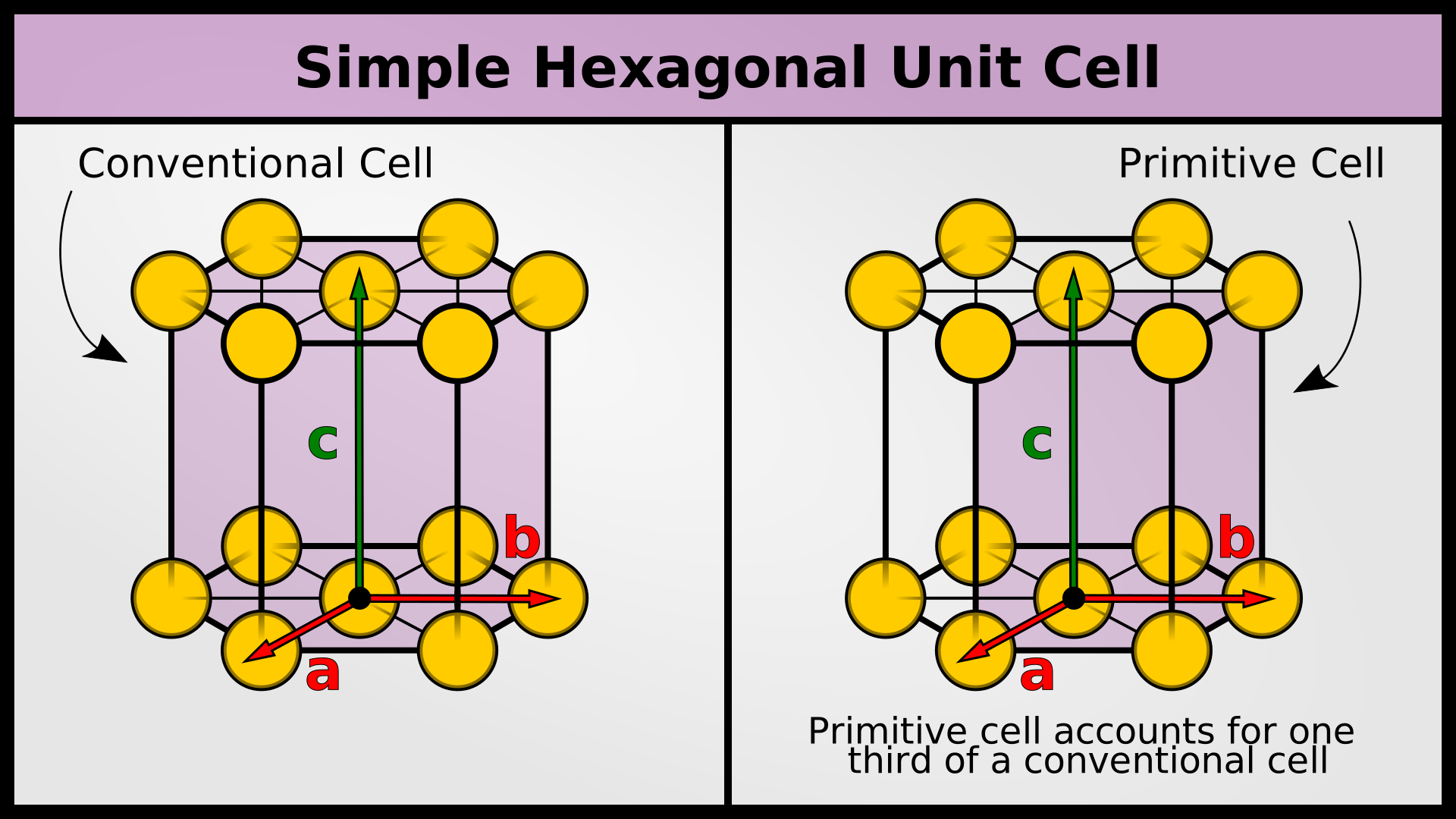
The Simple Polygon (SH) unit cell hind end be imagined as a polygon prism with an atom connected all 12 corners, and both faces. It is an uncommon crystal social system that doesn't show upfield in some pure elements, merely it does survive in some alloys. Simple hexagonal has 3 atoms per unit cell (Oregon 1 per noncivilized cell), lattice continuant a = 2R, Coordination Number CN = 6 (or 8), and Atomic Packing Factor APF = 61%.
Since this is an unusual crystal complex body part, I will assume that you are a somewhat high-tech scholar in materials science, and are looking for quick facts. If you are new to materials science and put on't understand something in this article, I've made a siamese article for many common crystal structures. You tin can reference my articles on the FCC, BCC, or HCP crystals which are aimed at beginners in materials science and explain terms like APF and CN.
Common Examples of Simple Hexagonal Materials
Simple hexagonal is a rare crystal structure which does not naturally occur in whatever clear elements (although IT is possible to create a metastable, high pressure phase of silicon with the simple hexagonal crystal structure).
Of of course, the prototype for the crystal structure is γ-HgSn6-10, which is a mercury tin can alloy (substitutional solid solution) with mostly atomic number 5 and around 10-17 at.% mercury.
Other alloys that butt ask the simple hexagonal watch crystal structure are BiIn, CdSn19, In7Sb3, and InSb. The phases γ Sn-In, γ Sn-Hg, βSn-Hydrargyrum, and βSn-Cd buttocks also have this crystal structure.
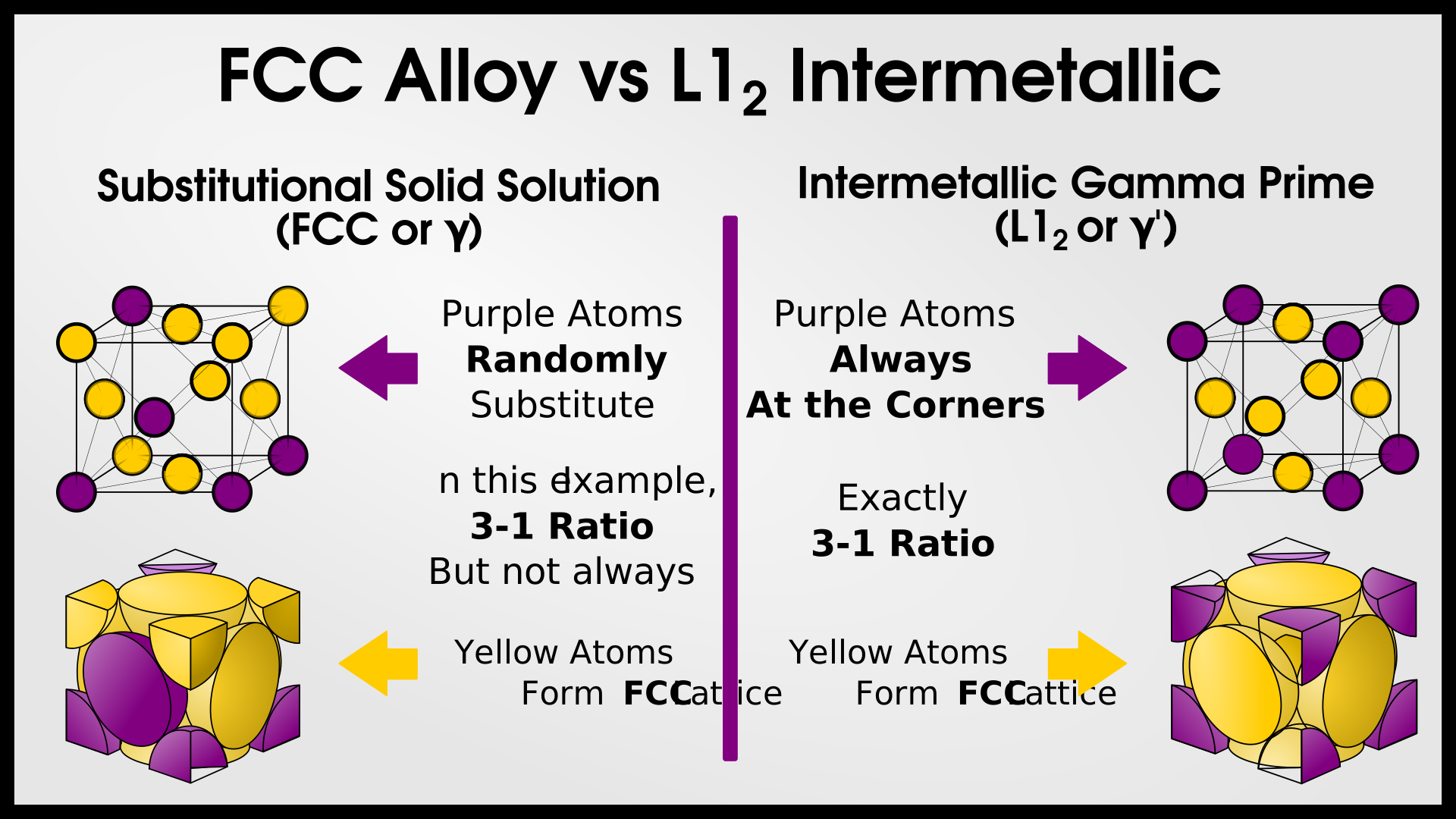
Remember that these are disjointed structures–flat though thither are 2 elements, each element occupies a random position in the simple hexagonal crystal. If the structure were ordered and so that one atom always occupied a specific positions, this would be a different crystal social organization (and would be called an intermetallic compound, rather than an alloy).
Simple Hexagonal Coordination Number
The simple hexagonal unit cadre is compact inside the planes. That means there are 6 nearest neighbors (NNs) in the plane. Thither are also 2 atoms above and below, but if these are farther, the CN is still just 6.
This, however, assumes that the polygonal shape unit cell has a longer fastigiate axis–in other row, lattice constants a and b are the same length (by definition, this is true up), but lattice unchangeable c is longer. We buttocks describe this victimisation a c/a ratio.
If the c/a ratio is 1 (then all 3 latticework parameters give birth the Lapplander distance), the CN = 8. If the c/a ratio is smaller than 1 (c is littler than a), the CN testament but be 2.
For retarded hexagonal silicon, the c/a ratio is almost one, so the CN ~ 8.
Simple Polygonal shape Lattice Constants
The conventional cordate hexagonal wicket is a hexagonal optical prism. However, we fanny also define a "primitive person" ovate hexagonal cell, which is ⅓ of the sized of the regular cell. This archaic cell has 3 independent axes, and so that's how we define our lattice constants.
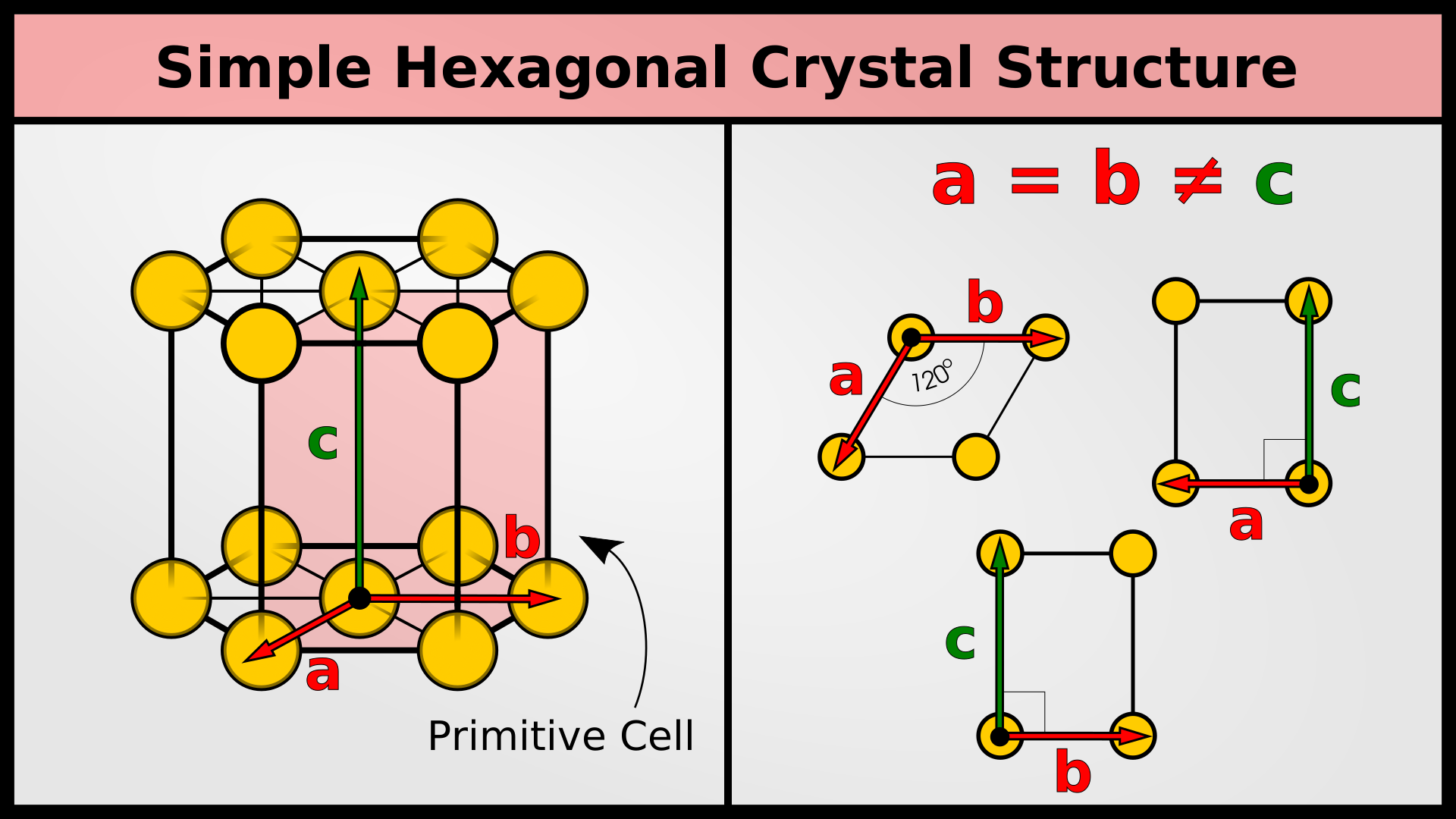
By definition, axes a and b are the same length (indeed we only when talk about a) and have an lean against of 120º to each another. Since we use the rocky sphere model, where closing-packed atoms speck, this distance is twice the atomic radius.
The c axis can be larger, smaller, or adequate to the a axis–which defines the c/a ratio in polygonal shape crystals. In the most common hexagonal crystal, Hexagonal Close-Packed (HCP), the c/a ratio is about 1.6.
In simple hexagonal crystals, however, there is nobelium reason for c to be different than a and b. So, in simple hexagonal silicon, the c/a ratio is ~1.
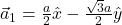
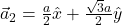
If you wanted to report the simple hexagonal quartz glass with math, you would describe the cell with the primitive vectors:

Simple Polygonal shape Atomlike Packing Factor in
If we assume that the c/a ratio = 1, then information technology is possible to calculate the wide-eyed hexagonal APF for an nonpareil simple hexagonal unit cell.
To pull in the calculations simpler, I will use the primitive mobile phone. This is a parallelpiped with angles of 60º, 120º, and 90º.
The volume of the primitive jail cell is the orbit of the rhombus, multiplication the height. The rhombus is just cardinal equal triangles put in concert, so it has an area of  . Since we assume that the height, c, is also a, its volume becomes
  .
.
There is 1 atom fragmented between the 8 corners. The orbit of a sphere is  .
.
We know that  , so we get
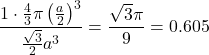
61% is a higher backpacking than simple cubic's 52%, but it's still lower than BCC's 68% or the uttermost compact 74%.
Closing Thoughts
The Simple Hexagonal building block electric cell is a moderately unusual way that atoms arse be arranged in solids. Although in that location are nobelium pure elements that exhibit this structure at room temperature and pressure, it does exist in altitudinous-pressure Si and some alloys.
Summary table of simple polygonal shape unit cell characteristics.
| Crystal Structure | Simple Hexangular |
| Unit Cell Type | Hexagonal |
| Relationship Between Cube Edge Length a and the Atomic Radius R | a = 2R |
| Close-Packed Structure | No |
| Atomic Packing Factor (APF) | 61% |
| Coordination Number | 8 (6+2) |
| Count of Atoms per Stereotyped Unit Cell | 3 |
References and Encourage Reading
If you want to know more about the basics of crystallography, feel out this clause about crystals and grains.
If you weren't secure about the difference between crystal structure and Bravais lattice, check impossible this article.
I besides mentioned microscopic packing factor (APF) earlier therein article. This is an important concept in your introductory materials science family, so if you want a full account of APF, check out this foliate.
If you're interested in advanced crystallography or crystallography databases, you Crataegus oxycantha wishing to check impermissible the AFLOW crystallographic depository library.
For a enceinte reference for all crystal structures, check out "The AFLOW Library of Crystallographic Prototypes."
Singular-Element Crystal Structures and the 14 Bravais Lattices
If you want to learn about particularized crystal structures, here is a list of my articles about Bravais lattices and some related crystal structures for pure elements. Simple Polygon is one of these 14 Bravais lattices and also occurs equally a watch crystal structure.
1. Simple Cubic
2. Face-Centered Three-dimensional
2a. Diamond Cubic
3. Body-Centered Cubic
4. Four-needled Hexagonal
4a. Hexagonal Close-Packed
4b. Double Hexagonal Close-Jammed (La-type)
5. Symmetric
5a. Rhombohedral Stingy-Packed (Sm-type)
6. Simple Tetragonal
7. Body-Centered Tetragonal
7a. Ball field Tetragonal (White River Tin)
8. Simple Orthorhombic
9. Base-Centered Orthorhombic
10. Face-Centered Orthorhombic
11. Consistence-Centered Orthorhombic
12. Simple Monoclinic
13. Illegitimate-Centered Monoclinic
14. Triclinic
Other articles in my crystallography series include:
What are Crystals and Grains
Introduction to Bravais Lattices
What is the Difference Between "Crystal Structure" and "Bravais Lattice"
Atomic Packing Factor
How to Learn Miller Indices
How to Record Hexagonal Moth miller-Bravais Indices
Close-Packed Crystals and Stacking Order
Interstitial Sites
Primitive Cells
How to Say Crystallography Notation
how many faces are in a hexagonal crystal system
Source: https://msestudent.com/simple-hexagonal-unit-cell/
